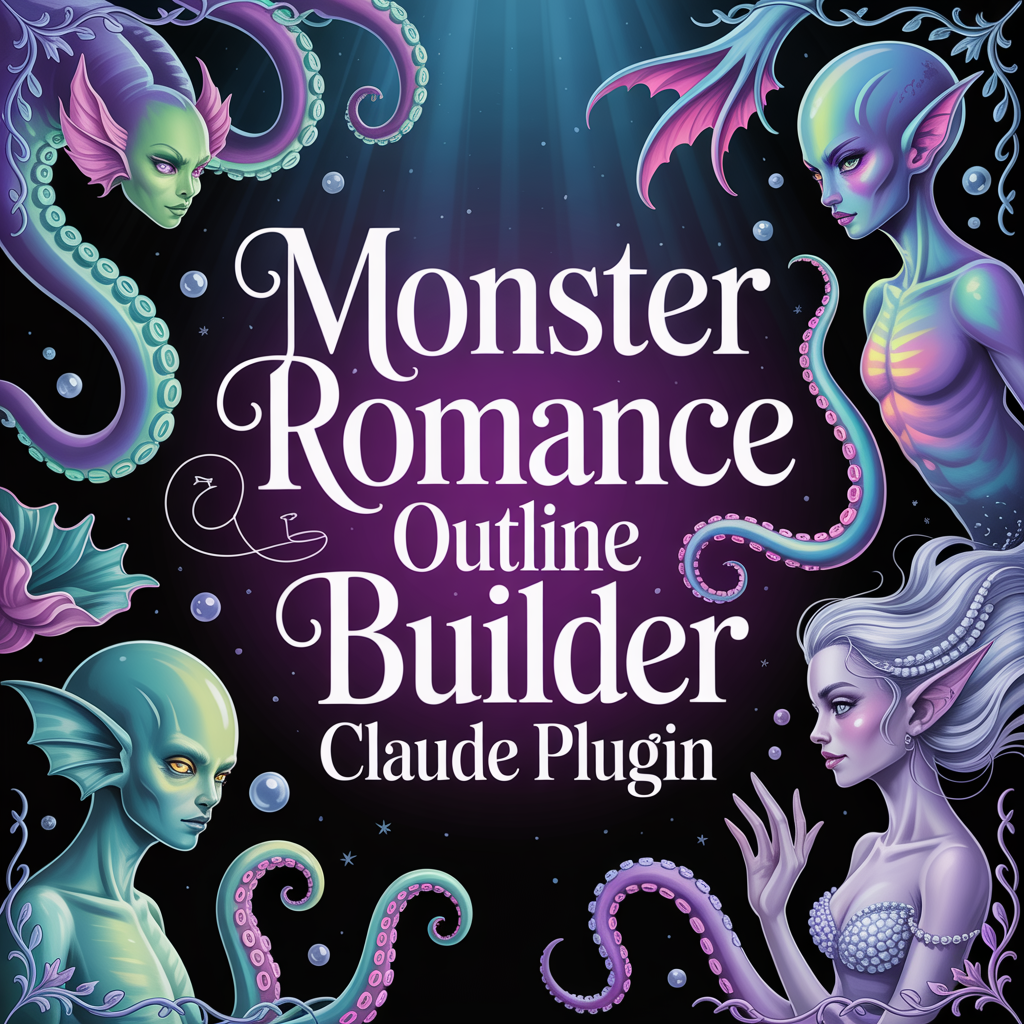
Monster Romance Outline Builder Claude Plugin

Original price was: $67.00.Current price is: $47.00.
📅 Preorder — releases August 1, 2026
Preorder price: $47.00 — goes up to $67.00 on release (30% off!)

Monster romance outline builder with the Species Integrity System — 5 rules keeping your orcs, aliens, tentacle beings, and demons truly monstrous. Covers non-human anatomy, cognitive otherness, physical compatibility engineering, and consent across species. 13-step interactive workflow. Requires Claude Desktop.

In stock

Description

AI Fails at Monster Romance Outlines. This Plugin Fixes It.

The Problem: Standard AI outline builders treat monsters as humanoid creatures with minor tweaks. Your alien is a hot guy with green skin. Your tentacle being is a human with attachments. Your insectoid has human emotions and human body mechanics. Ask any monster romance reader: the monster’s alien anatomy, inhuman cognition, and radical otherness should be the romance engine, not window dressing. The physical incompatibility should create real romantic tension. The species gap should drive consent negotiation. But generic AI just… doesn’t get that.

The Monster Romance Outline Builder solves this with the Species Integrity System—5 structural rules that embed monster authenticity into your romance DNA. It walks you through a 13-step interactive workflow that builds an outline where the creature’s monstrous nature and the romance arc are inseparable. No more monsters treated as humans. Your creature stays truly, radically OTHER.

The Species Integrity System — 5 Structural Rules

These 5 rules ensure monster elements are structural, not cosmetic:

  1. Anatomical Consistency: Creature anatomy (tentacles, exoskeletons, multiple limbs, plant physiology, alien biology) established must hold throughout the story. No contradictions. If your alien has six limbs and sensory tendrils, they use them in every scene. If your tentacle being has poor manual dexterity due to suction-cup grip, that matters. If your insectoid has chitinous armor, that affects intimacy mechanics. Anatomy drives plot and romance.
  2. Cognitive Otherness: The monster thinks fundamentally different from humans. They have alien sensory input (heat sensing, electromagnetic perception, pheromone detection), alien decision-making (hive mind influence, instinct-driven logic, non-linear time perception), alien emotional response (no shame, possessiveness as primary bond, predator-prey attraction). The reader should never forget they’re inside an inhuman mind.
  3. Physical Compatibility Engineering: Intimacy and romance must account for monstrous anatomy realistically. Tentacles have grip strength and sensory complexity. Exoskeletons create friction and require negotiation. Wings shift balance and create vulnerability. Alien bodies generate different heat, different pheromones, different sensations. The physical gap becomes a romance obstacle and opportunity.
  4. Consent Across Species: Monsters and their human/hybrid partners navigate consent frameworks that acknowledge biological difference. Communication despite different language systems. Negotiation about touch, penetration, intensity. Adaptation for safety and pleasure. The species gap becomes the romance’s central tension—not resolved through humanization, but through genuine cross-species understanding.
  5. Monster POV Authenticity: One character (usually the creature) maintains an alien perspective that never defaults to human values. They don’t learn to feel human emotion—they feel creature emotion, which is different. They don’t adopt human morality—they negotiate ethics with their partner. The reader stays inside an inhuman POV without apologizing for it.

How the Outline Builder Works — 13 Interactive Steps

The plugin guides you through a conversation-based workflow:

  1. Creature Type Selection: Fantasy monster, sci-fi alien, tentacle being, eldritch horror, mer-creature, insectoid, plant creature, demon, orc, or custom. The plugin loads subtype-specific logic for that creature’s anatomy, sensory input, cognition, and romance hooks.
  2. Monster Anatomy Deep-Dive: What’s their specific physiology? (e.g., tentacled alien with biomechanical limbs, insectoid with chitinous carapace and pheromone communication, eldritch horror with impossible geometry, dragon with wings and fire-heated biology.) How does this anatomy shape their worldview and capabilities?
  3. Creature Cognition Profile: How does this creature think? (Pack mind? Individual consciousness? Hive-linked? Instinct-driven? Predator logic? Herbivore paranoia?) What sensory input do they have that humans lack? How does their decision-making differ from human logic?
  4. Human/Grounding Character Definition: Who is the human partner or hybrid anchor? (Pure human, genetically modified human, hybrid creature, other alien species?) What makes them grounded and how do they perceive the monster’s otherness?
  5. How They Meet: What brings them together? (Captured/forced proximity? Research encounter? Rescue scenario? Invasion romance? Lost-in-alien-world?) The plugin maps how their biological difference creates immediate sensory and cognitive friction.
  6. Core Conflict — Biological Layer: What anatomical or physiological obstacle blocks their relationship? (Size difference, incompatible biology, different oxygen requirements, sensory misalignment, predator-prey dynamic, incompatible pheromone chemistry.) This becomes the story’s highest stakes.
  7. Core Conflict — Cognitive Layer: What does each character’s different thinking create? (Monster can’t understand human shame; human can’t understand creature’s hive mentality; alien has no concept of monogamy; insectoid experiences time differently.) The species gap IS the conflict.
  8. Consent & Intimacy Mechanics: How do they navigate physical intimacy across species lines? What communication systems work? What adaptations are needed? Sweet, spicy, or scorching? The plugin outlines how intimacy escalates while respecting anatomical reality.
  9. Monster POV Development: What’s the creature’s interior experience? How do they perceive their human partner? What does love/attraction mean in their alien neurology? Does the creature learn to understand humans, or do humans learn to understand the creature—or both?
  10. Supporting Cast & Politics: Creature hive/colony/flock members, human authorities, hybrid communities. These create plot obstacles rooted in species conflict. The plugin maps how different creatures’ goals create escalating stakes.
  11. Worldbuilding Essentials: How do humans and monsters interact? (Hidden from each other? At war? Integrated society? Underground?) What are the rules of cross-species relationship? Legal? Social? Biological? The plugin helps you make species-conflict drive plot.
  12. Major Plot Turns — 3 Acts: Act 1 (creature/human encounter), Act 2 Midpoint (species-gap obstacles escalate, intimacy deepens), Act 3 Climax (biological conflict converges with emotional breakthrough). The plugin helps you identify where anatomical reality and romance arc intersect.
  13. Outline Structure — Chapter-by-Chapter: The plugin generates a beat sheet. Each chapter includes emotional beats, anatomical challenge beats, cognitive otherness reinforcement, consent/communication milestones, and Monster POV consistency checkpoints.
  14. Final Outline Export: You get a full outline (3,000—5,000 words) formatted for handoff to a manuscript writer (AI or human). It includes chapter summaries, character arcs, creature anatomy/cognition profiles, anatomical-compatibility maps, Species Integrity System compliance notes, and K-Lytics market insights.

Creature Types & Their Logic

Creature Archetypes & Specific Mechanics:

  • Dragons/Fantasy Monsters: Size compatibility, thermal regulation (breath, fire-heated bodies), territorial aggression, hoard mentality, flight mechanics affecting intimacy. The plugin maps how monster biology creates romance obstacles.
  • Tentacle Beings: Multiple appendages, suction-cup vs. grip strength, sensory complexity through touch, unusual flexibility. Explores how tentacles enable intimacy impossible with human anatomy.
  • Aliens (Sci-Fi): Alien sensory input (infrared vision, electromagnetic sense, pheromone detection), different atmospheric needs, exoskeletal armor, non-humanoid communication. Maps how beings from different planets navigate romance.
  • Eldritch Horrors: Impossible anatomy, reality-bending perception, incomprehensible cognition, madness-inducing existence. The plugin explores how romance works when one partner’s mind operates outside human perception.
  • Mer-Creatures: Aquatic vs. terrestrial biology, breathing mechanics, temperature differences, salt-water skin, tail mobility. Maps intimacy challenges and opportunities unique to hybrid-environment creatures.
  • Insectoids: Exoskeleton, hive-mind influence, pheromone communication, multiple limbs, compound eyes. Explores how insect-cognition creates alien attraction and alien relationship dynamics.
  • Plant Creatures: Alien reproduction mechanics, slow cognition, sensory input through root systems, nutrient exchange instead of food. The plugin maps how plant-based creatures experience intimacy and bonding.
  • Demons/Mythological: Supernatural biology, magical/demonic energy, inhuman strength, different moral frameworks. Explores how supernatural creatures negotiate human concepts like love and commitment.
  • Orcs/Fantasy Humanoids (Truly Monstrous): Not just green humans—actual alien cognition, different aggression thresholds, matriarchal or hive structures, non-human communication patterns. The plugin keeps them monstrous, not humanized.

Relationship Types: Human/monster, creature/human hybrid, monster/monster (cross-species), human/alien, monster/non-humanoid. The plugin maps how each relationship type interacts with species-gap obstacles.

Heat Levels: Fade-to-black, closed-door, spicy, scorching. The plugin tailors monster-specific intimacy (tentacle sensitivity, exoskeleton constraints, alien pheromone bonding, fire-heated dragon bodies, etc.) to your chosen heat level.

Genre Pillars — Monster Romance DNA

Pillar 1: Monstrosity as Romance Engine
The monster’s alien anatomy, inhuman cognition, and radical otherness don’t enhance the romance—they ARE the romance. Remove the creature’s otherness and the romance collapses. The physical incompatibility is the central tension. The species-gap consent negotiation is the love story. The alien perspective is the emotional core. The monster’s inhuman nature drives every turning point.

Pillar 2: Anatomical Stakes
The stakes aren’t just emotional—they’re biological and physical. A creature with exoskeleton armor can’t hold a human gently without intention. An alien with telepathic pheromones experiences intimacy as involuntary mind-merging. A tentacle being’s grip can damage human skin. An eldritch horror’s presence can cause perceptual damage. A dragon’s body temperature can burn. The creature’s anatomy creates real consequences that human-human romance can’t touch.

What You Get

  • Complete monster romance outline (3,000—5,000 words, chapter-by-chapter breakdown)
  • Creature anatomy profile (detailed physiology, sensory input, mechanical capabilities)
  • Creature cognition profile (decision-making logic, emotional response, alien perception)
  • Human/hybrid character profile with creature-interaction depth
  • 13-step interactive workflow (conversation-based, no forms to fill)
  • Species Integrity System compliance map (all 5 rules applied per chapter)
  • Anatomical compatibility map (physical obstacles, intimacy mechanics, consent frameworks)
  • Heat level guide (tailored to creature type + chosen heat level)
  • Detailed chapter-by-chapter beat sheet (emotional + anatomical + cognitive beats)
  • Monster POV consistency guide (how creature perspective differs from human)
  • Outline formatted for handoff to manuscript writer (or human co-author)
  • K-Lytics market integration (current trends in creature romance archetypes, reader preferences)
  • Built-in creature trope library with anatomy profiles and market hooks for every major creature type

K-Lytics Market Integration

The outline builder accesses K-Lytics market data (from your Google Drive) to show you:

  • Top-trending creature archetypes (which monsters readers are searching for right now)
  • Heat level demand by creature type (are scorching tentacle romances trending? Is sweet dragon romance growing?)
  • Relationship type preferences (human/creature vs. creature/creature, monster harem dynamics, etc.)
  • Underserved creature niches (where reader demand exceeds supply)
  • Keyword opportunities for your outline’s specific creature type

This keeps your outline aligned with reader demand while maintaining creative authenticity.

How to Use It

Getting Started:
Open the plugin in Claude Desktop. Answer the opening question: “What creature type interests you?” (Choose dragon, alien, tentacle, eldritch, mer-creature, insectoid, plant, demon, orc, or custom.) The plugin loads creature-specific logic and begins the 13-step conversation.

The Conversation:
Each step is a natural back-and-forth. The plugin asks questions, you answer. It builds on your answers. By step 5, it’s asking about specific creature anatomy. By step 7, it’s mapping consent mechanics. By step 10, it’s showing K-Lytics market insights for your creature type. By step 13, it’s generating your outline.

Customization Loops:
After your outline is generated, you can request revisions. “Make the tentacle being’s anatomy more unique.” “Strengthen the anatomical compatibility obstacles.” “Add more insectoid hive-mind politics.” The plugin regenerates relevant sections while preserving your core outline.

Output:
Download your completed outline as .md, .txt, or .docx. It’s formatted and ready to share with a co-author, manuscript writer, or beta readers. Includes internal notes on Species Integrity System compliance and anatomical consistency checkpoints so anyone writing from your outline understands the monster’s true otherness.

Inside the Plugin

  • SKILL.md: The core 13-step interactive conversation logic, Species Integrity System framework, creature type handling, K-Lytics market integration, and outline generation engine
  • creature-types.md: Quick-reference creature catalog — anatomy overview, cognition style, best trope combos (with market data), and compatibility notes for every creature type. Includes Anatomy Customization guide (knotting, oviposition, dual anatomy, pheromones, venom, and more) and Build Your Own Creature template for custom species like gryphons, nagas, centaurs, and anything you dream up
  • workflow-steps.md: Step-by-step outline building workflow — from creature selection through final export, with quality gates at each phase
  • species-integrity-system.md: The complete 5-rule guardrail system — anatomical consistency, cognitive otherness, physical compatibility engineering, consent across species, and monster POV authenticity. Includes examples across creature types and compliance checking criteria
  • monster-tropes.md: Creature-specific trope library — trending monster romance archetypes, creature type templates (dragons, aliens, tentacle beings, eldritch, mer-creatures, insectoids, plant creatures, demons, orcs), anatomy profiles, cognition patterns, heat level mechanics, and K-Lytics market hooks
  • outline-monster-romance.md: Quick-start command — say “outline monster romance” and the plugin launches the 13-step workflow

Requirements

Claude Desktop (latest version) with plugin support enabled. Sufficient token allowance for a multi-turn conversation (typically 20,000—40,000 tokens for full 13-step workflow). Google Drive access for K-Lytics market data integration. Internet connection for initial plugin download. Works offline after installation.

Reviews

There are no reviews yet.

Only logged in customers who have purchased this product may leave a review.
Related products